Candy Crush Saga Audience in United States
Candy Crush Saga has an estimated audience of 7.3M people in United States.
The average Candy Crush Saga fan in United States is 36.9 years old, more female, and lives primarily in California.
By number of fans, Candy Crush Saga ranks #3 among the 432 objects in Puzzle game in United States — 19.4× the group median.
Its fans are 1.2 years older than the group average of 35.7.
Compared with the other 431 objects in Puzzle game, Candy Crush Saga fans stand out for their interest in Dumb Ways to Die, AddictingGames and Wii.
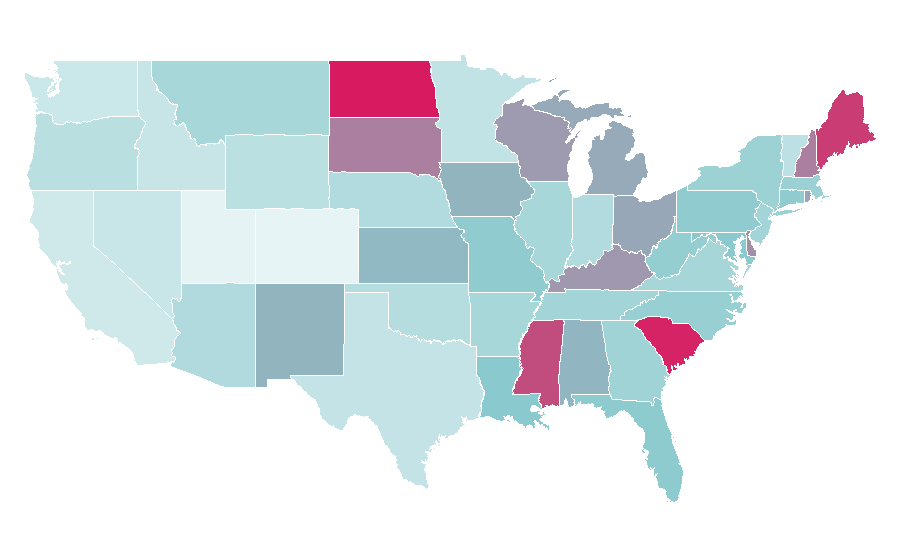
Most fans live in California, Florida, New York.
Top affinities include Dumb Ways to Die, AddictingGames, Wii, with strongest over-indexing on Dumb Ways to Die (38.64× the country average).
Demographically, the Candy Crush Saga audience skews more female with an average age of 36.9, and over-indexes on personality traits such as Price Sensitivity, Mindfulness.
The typical Candy Crush Saga fan in United States is more female, around 36.9 years old, with strong Price Sensitivity tendencies and a notable affinity for Dumb Ways to Die.
At a glance
Search interest · 12-month trend
Demographics of Candy Crush Saga fans
56.0% are female, 44.0% are male, average age 36.9.
Gender split
| Metric | Value |
|---|---|
| Female | 56.0% |
| Male | 44.0% |
| Average age | 36.9 |
| Estimated audience size | 7.3M |
Age distribution
| Age bracket | Share | % |
|---|---|---|
| 16-24 | 31% | |
| 25-34 | 18% | |
| 35-44 | 16% | |
| 45-54 | 18% | |
| 55+ | 17% |
Worldwide distribution
of the worldwide Candy Crush Saga audience comes from United States.
| Country | Share |
|---|---|
| United States | 24.9% |
| United Kingdom | 8.1% |
| France | 6.2% |
Geography
Top regions by affinity
| # | Region | Reach | Affinity | × |
|---|---|---|---|---|
| 01 | North Dakota | ~30K | 1.81× | |
| 02 | South Carolina | ~200K | 1.78× | |
| 03 | Hawaii | ~60K | 1.78× | |
| 04 | Maine | ~50K | 1.68× | |
| 05 | Mississippi | ~100K | 1.61× | |
| 06 | New Hampshire | ~40K | 1.41× | |
| 07 | South Dakota | ~30K | 1.41× | |
| 08 | Delaware | ~30K | 1.35× | |
| 09 | Kentucky | ~100K | 1.31× | |
| 10 | Wisconsin | ~200K | 1.30× | |
| 11 | Rhode Island | ~30K | 1.26× | |
| 12 | Ohio | ~300K | 1.25× | |
| 13 | Michigan | ~300K | 1.24× | |
| 14 | Iowa | ~80K | 1.20× | |
| 15 | New Mexico | ~60K | 1.20× | |
| 16 | Alabama | ~100K | 1.19× | |
| 17 | Kansas | ~80K | 1.18× | |
| 18 | Maryland | ~100K | 1.11× | |
| 19 | Louisiana | ~100K | 1.11× | |
| 20 | Florida | ~500K | 1.08× | |
| 21 | Pennsylvania | ~300K | 1.07× | |
| 22 | Missouri | ~100K | 1.07× | |
| 23 | Connecticut | ~80K | 1.07× | |
| 24 | West Virginia | ~40K | 1.03× | |
| 25 | North Carolina | ~200K | 1.01× | |
| 26 | Massachusetts | ~200K | 0.99× | |
| 27 | New York | ~400K | 0.97× | |
| 28 | Georgia | ~200K | 0.95× | |
| 29 | New Jersey | ~200K | 0.93× | |
| 30 | Tennessee | ~100K | 0.93× | |
| 31 | Virginia | ~200K | 0.90× | |
| 32 | Illinois | ~200K | 0.89× | |
| 33 | Arkansas | ~60K | 0.89× | |
| 34 | Montana | ~20K | 0.89× | |
| 35 | Arizona | ~100K | 0.83× | |
| 36 | Indiana | ~100K | 0.82× | |
| 37 | Nebraska | ~30K | 0.82× | |
| 38 | Oklahoma | ~70K | 0.79× | |
| 39 | Alaska | ~10K | 0.77× | |
| 40 | Oregon | ~70K | 0.76× | |
| 41 | Wyoming | ~9K | 0.75× | |
| 42 | Vermont | ~10K | 0.74× | |
| 43 | Minnesota | ~90K | 0.70× | |
| 44 | Texas | ~300K | 0.69× | |
| 45 | Idaho | ~30K | 0.66× | |
| 46 | Nevada | ~50K | 0.65× | |
| 47 | Washington | ~100K | 0.64× | |
| 48 | California | ~500K | 0.60× | |
| 49 | Utah | ~30K | 0.44× | |
| 50 | Colorado | ~50K | 0.43× |
Affinity by region
Audience interests & affinities
Top cross-interests, ranked by affinity
| # | · | Interest | Category | Affinity | × |
|---|---|---|---|---|---|
| 01 | Dumb Ways to Die | Cars & Mobility | 38.64× | ||
| 02 | AddictingGames | Games | 21.16× | ||
| 03 | Wii | Games | 15.37× | ||
| 04 | Hay Day | Games | 14.01× | ||
| 05 | Clash of Clans | Games | 13.73× | ||
| 06 | Happy Farm | Games | 13.45× | ||
| 07 | Boom Beach | Games | 13.31× | ||
| 08 | City-building game | Games | 13.30× | ||
| 09 | SimCity | Games | 12.28× | ||
| 10 | Fishdom | Games | 11.83× | ||
| 11 | Angry Birds | Games | 10.99× | ||
| 12 | Life simulation game | Games | 10.96× | ||
| 13 | Raspberry Pi | Technology & Electronics | 10.24× | ||
| 14 | quora | Internet & Social Media | 10.22× | ||
| 15 | Tile-matching video game | Games | 8.00× | ||
| 16 | The Sims | Games | 7.49× | ||
| 17 | Kings (U.S. TV series) | Movies & TV | 5.69× | ||
| 18 | Gmail | Internet & Social Media | 3.12× | ||
| 19 | T-Mobile | Technology & Electronics | 2.70× | ||
| 20 | Puzzle video games | Games | 2.58× |
Personality of the Candy Crush Saga audience
Deviation from the national baseline
| Trait | Cluster | Deviation | Score |
|---|---|---|---|
| Price Sensitivity | PREMIUM | 1.02× | |
| Mindfulness | BALANCE | 1.01× | |
| Social Media Usage | JOY | 1.00× |
| Trait | Cluster | Deviation | Score |
|---|---|---|---|
| Quality Awareness | PREMIUM | 0.68× | |
| Luxury Orientation | PREMIUM | 0.72× | |
| Design Affinity | PREMIUM | 0.78× |
Explore more audiences
More Puzzle game audiences in United States
- Block Blast (13,031,787)
- Angry Birds (3,646,521)
Source & method
- Source
- Rascasse Solution, own modelling
- What “fans” means here
- Estimated number of people in United States with measurable interest in Candy Crush Saga over the last 12 months. Modelled, not counted; people interested in several video / board games count for each of them.
- Data basis
- Anonymised behavioural signals: search demand, social media signals, sponsorship and event data. Not a survey.
- Period
- 10/2025 – 09/2026 · updated quarterly · data status Q3/2026
- Confidence
- high gender and age data available and an audience of at least 100,000 people
Cite as: “Rascasse Solution, Q3/2026, rascasse.com/explore/us/candy-crush-saga-20750” · Methodology