J.Jill Target Market in United States
J.Jill has an estimated audience of 3,444,595 people in United States.
The average J.Jill fan in United States is 49.9 years old, more female, and lives primarily in California.
By number of fans, J.Jill ranks #3 among the 67 objects in Apparel in United States — 35.8× the group median.
Its fans are 14.1 years older than the group average of 35.8.
Women make up 91.9% of the fan base, 24.2 percentage points more than the group average.
Compared with the other 66 objects in Apparel, J.Jill fans stand out for their interest in Orlebar Brown, Fitness & Health and Australia's Got Talent.
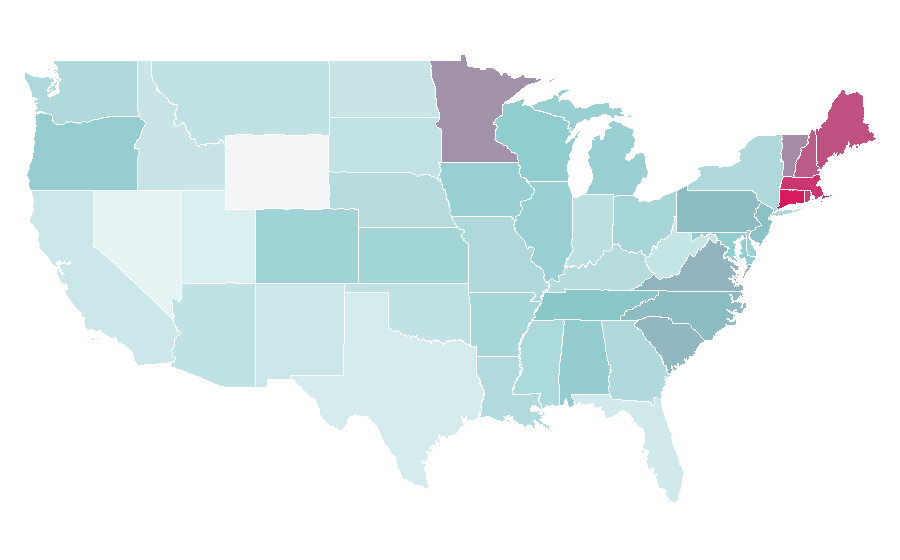
Most fans live in California, New York, Pennsylvania.
Top affinities include Orlebar Brown, Fitness & Health, Australia's Got Talent, with strongest over-indexing on Orlebar Brown (158.93× the country average).
Demographically, the J.Jill audience skews more female with an average age of 49.9, and over-indexes on personality traits such as Design Affinity, Luxury Orientation.
The typical J.Jill fan in United States is more female, around 49.9 years old, with strong Design Affinity tendencies and a notable affinity for Orlebar Brown.
At a glance
Search interest · 12-month trend
Customer demographics of J.Jill
91.9% are female, 8.1% are male, average age 49.9.
Gender split
| Metric | Value |
|---|---|
| Female | 91.9% |
| Male | 8.1% |
| Average age | 49.9 |
| Estimated audience size | 3,444,595 |
Age distribution
| Age bracket | Share | % |
|---|---|---|
| 16-24 | 8% | |
| 25-34 | 7% | |
| 35-44 | 11% | |
| 45-54 | 25% | |
| 55+ | 49% |
Worldwide distribution
of the worldwide J.Jill audience comes from United States.
| Country | Share |
|---|---|
| United States | 92.5% |
| Japan | 1.2% |
| China | 1.0% |
Geography
Top regions by affinity
| # | Region | Reach | Affinity | × |
|---|---|---|---|---|
| 01 | Connecticut | ~70K | 2.02× | |
| 02 | Massachusetts | ~100K | 1.90× | |
| 03 | Rhode Island | ~20K | 1.84× | |
| 04 | Maine | ~20K | 1.77× | |
| 05 | New Hampshire | ~20K | 1.72× | |
| 06 | Vermont | ~10K | 1.50× | |
| 07 | Minnesota | ~90K | 1.47× | |
| 08 | Virginia | ~100K | 1.31× | |
| 09 | South Carolina | ~70K | 1.29× | |
| 10 | Pennsylvania | ~200K | 1.27× | |
| 11 | North Carolina | ~100K | 1.27× | |
| 12 | New Jersey | ~100K | 1.25× | |
| 13 | Tennessee | ~90K | 1.22× | |
| 14 | Wisconsin | ~70K | 1.16× | |
| 15 | Maryland | ~70K | 1.14× | |
| 16 | Alabama | ~60K | 1.14× | |
| 17 | Oregon | ~50K | 1.12× | |
| 18 | Illinois | ~100K | 1.09× | |
| 19 | Iowa | ~40K | 1.09× | |
| 20 | Michigan | ~100K | 1.08× | |
| 21 | Delaware | ~10K | 1.07× | |
| 22 | Colorado | ~60K | 1.02× | |
| 23 | Kansas | ~30K | 0.99× | |
| 24 | Ohio | ~100K | 0.97× | |
| 25 | Arkansas | ~30K | 0.96× | |
| 26 | Mississippi | ~30K | 0.91× | |
| 27 | New York | ~200K | 0.90× | |
| 28 | Washington | ~70K | 0.90× | |
| 29 | Missouri | ~60K | 0.90× | |
| 30 | Georgia | ~100K | 0.89× | |
| 31 | Louisiana | ~40K | 0.87× | |
| 32 | Kentucky | ~40K | 0.84× | |
| 33 | Nebraska | ~20K | 0.83× | |
| 34 | Indiana | ~50K | 0.78× | |
| 35 | Arizona | ~60K | 0.74× | |
| 36 | Oklahoma | ~30K | 0.74× | |
| 37 | Montana | ~8K | 0.74× | |
| 38 | South Dakota | ~7K | 0.72× | |
| 39 | West Virginia | ~10K | 0.69× | |
| 40 | Idaho | ~10K | 0.68× | |
| 41 | North Dakota | ~5K | 0.68× | |
| 42 | California | ~300K | 0.66× | |
| 43 | New Mexico | ~10K | 0.66× | |
| 44 | Washington, District of Columbia | ~5K | 0.64× | |
| 45 | Florida | ~100K | 0.61× | |
| 46 | Alaska | ~4K | 0.59× | |
| 47 | Texas | ~100K | 0.57× | |
| 48 | Utah | ~20K | 0.51× | |
| 49 | Nevada | ~10K | 0.42× | |
| 50 | Hawaii | ~6K | 0.41× |
Affinity by region
Audience interests & affinities
Top cross-interests, ranked by affinity
| # | · | Interest | Category | Affinity | × |
|---|---|---|---|---|---|
| 01 | Orlebar Brown | Fashion & Accessoires | 158.93× | ||
| 02 | Fitness & Health | Games | 144.39× | ||
| 03 | Australia's Got Talent | Movies & TV | 96.99× | ||
| 04 | Soft Surroundings | Shopping | 91.76× | ||
| 05 | Barbour | Fashion & Accessoires | 49.25× | ||
| 06 | Joules | Fashion & Accessoires | 45.99× | ||
| 07 | Hyrox | Sports | 36.87× | ||
| 08 | NHL (video game series) | Games | 30.02× | ||
| 09 | Mario Lemieux | Sports | 28.25× | ||
| 10 | COS | Shopping | 22.39× | ||
| 11 | Pay Day (board game) | Games | 20.73× | ||
| 12 | Noah (band) | Movies & TV | 20.00× | ||
| 13 | Pure Hockey | Sports | 17.41× | ||
| 14 | JoS. A. Bank Clothiers | Business & Career | 16.20× | ||
| 15 | Eileen Fisher | Fashion & Accessoires | 16.11× | ||
| 16 | White House Black Market | Fashion & Accessoires | 12.73× | ||
| 17 | J.Crew Factory | Shopping | 8.81× | ||
| 18 | Men's Fashion | Fashion & Accessoires | 6.97× | ||
| 19 | Robert Redford | Movies & TV | 5.38× | ||
| 20 | T.J.Maxx | Shopping | 3.91× |
Personality of the J.Jill audience
Deviation from the national baseline
| Trait | Cluster | Deviation | Score |
|---|---|---|---|
| Design Affinity | PREMIUM | 1.90× | |
| Luxury Orientation | PREMIUM | 1.71× | |
| Sustainability | BALANCE | 1.61× |
| Trait | Cluster | Deviation | Score |
|---|---|---|---|
| Need for Security | CONSERVATISM | 0.66× | |
| Convenience Orientation | PREMIUM | 0.71× | |
| Patriotism | CONSERVATISM | 0.72× |
Explore more audiences
Source & method
- Source
- Rascasse Solution, own modelling
- What “fans” means here
- Estimated number of people in United States with measurable interest in J.Jill over the last 12 months. Modelled, not counted; people interested in several brands count for each of them.
- Data basis
- Anonymised behavioural signals: search demand, social media signals, sponsorship and event data. Not a survey.
- Period
- 07/2025 – 06/2026 · updated quarterly · data status Q2/2026
- Confidence
- high gender and age data available and an audience of at least 100,000 people
Cite as: “Rascasse Solution, Q2/2026, rascasse.com/explore/us/jjill-57618” · Methodology