ResearchGate Audience in Germany
A data profile of the people who buy, follow and care about ResearchGate in Germany — modelled from more than twelve digital signal sources. ResearchGate has an estimated audience of 936,503 people in Germany.
The average ResearchGate fan in Germany is 33.7 years old, more female, and lives primarily in Nordrhein-Westfalen.
The audience is concentrated in Nordrhein-Westfalen, Bayern, Baden-Württemberg.
At a glance
The key figures that characterise the ResearchGate profile in Germany.
Search interest · 12-month trend
Audience demographics of ResearchGate
56.4% are female, 43.6% are male, average age 33.7.
Gender split
| Metric | Value |
|---|---|
| Female | 56.4% |
| Male | 43.6% |
| Average age | 33.7 |
| Estimated audience size | 936,503 |
Age distribution
| Age bracket | Share | % |
|---|---|---|
| 16-19 | 35% | |
| 20-29 | 20% | |
| 30-39 | 18% | |
| 40-49 | 18% | |
| 50+ | 10% |
Worldwide distribution
of the worldwide ResearchGate audience comes from Germany.
| Country | Share |
|---|---|
| United States | 39.9% |
| Germany | 25.0% |
| Italy | 24.6% |
Geography
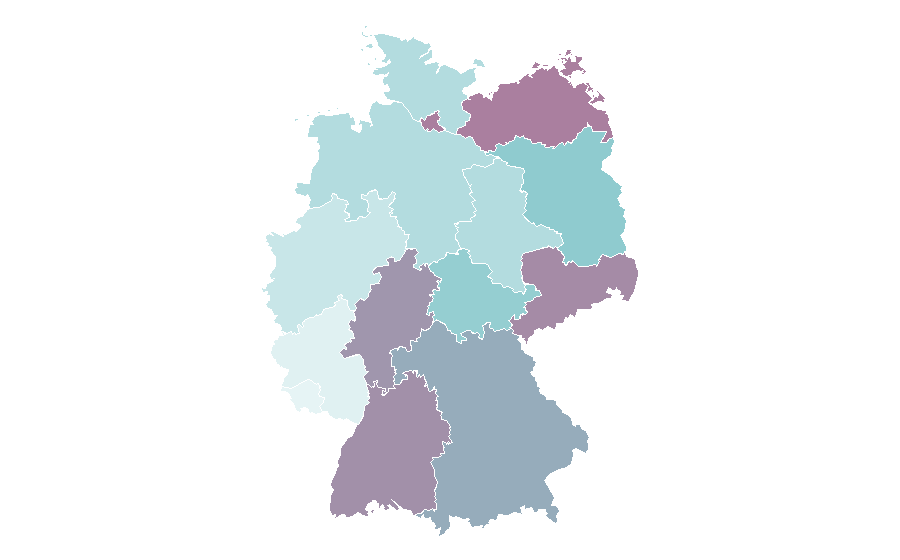
Where the ResearchGate audience in Germany is strongest.
Top regions by affinity
| # | Region | Reach | Affinity | × |
|---|---|---|---|---|
| 01 | Berlin | ~50K | 1.33× | |
| 02 | Hamburg | ~20K | 1.15× | |
| 03 | Mecklenburg-Vorpommern | ~20K | 1.15× | |
| 04 | Sachsen | ~50K | 1.13× | |
| 05 | Baden-Württemberg | ~100K | 1.12× | |
| 06 | Hessen | ~80K | 1.11× | |
| 07 | Bremen | ~9K | 1.10× | |
| 08 | Bayern | ~200K | 1.07× | |
| 09 | Brandenburg | ~30K | 1.00× | |
| 10 | Thüringen | ~20K | 0.98× | |
| 11 | Niedersachsen | ~80K | 0.88× | |
| 12 | Schleswig-Holstein | ~30K | 0.88× | |
| 13 | Sachsen-Anhalt | ~20K | 0.88× | |
| 14 | Nordrhein-Westfalen | ~200K | 0.81× | |
| 15 | Rheinland-Pfalz | ~30K | 0.73× | |
| 16 | Saarland | ~8K | 0.71× |
Affinity by region
Explore more audiences
Related profiles, rankings and the same audience in other markets.
More E-learning audiences in Germany
- Duolingo (2,680,838)
- Babbel (1,058,762)
- Udemy (1,029,355)
- Khan Academy (546,323)
- Rosetta Stone (software) (251,873)
See ResearchGate audiences in other countries
How to read this data
Audience size is the estimated number of people in Germany who actively search for ResearchGate. Affinity is an over-index ratio: 2.0× means the audience is twice as likely to engage with that brand or trait as the country average. Reach is the estimated number of audience members in a region. Regional and brand-affinity tables are sorted from strongest signal to weakest.
About this audience profile
This audience profile is generated by Rascasse from anonymized search-behavior signals across Germany. For methodology see methodology. Affinity values are over-index ratios vs. the country average (1.0 = baseline). Audience sizes are estimated, not measured.
From global mass-market brands to niche local segments — explore the full library and see which intelligence layers are included.