NCAA Division I Baseball Championship Audience in United States
A data profile of the people who buy, follow and care about NCAA Division I Baseball Championship in United States — modelled from more than twelve digital signal sources. NCAA Division I Baseball Championship has an estimated audience of 397,939 people in United States.
The average NCAA Division I Baseball Championship fan in United States is 39.1 years old, more male, and lives primarily in Texas.
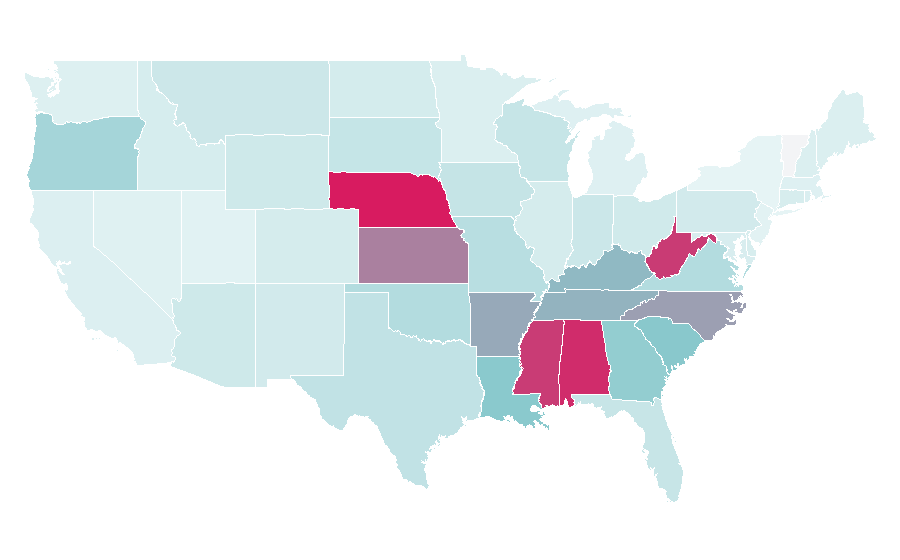
The audience is concentrated in Texas, California, North Carolina.
Top brand affinities include WEBstaurantStore, Ligament, Cartilage, with strongest over-indexing on WEBstaurantStore (40.43× the country average).
Demographically, the NCAA Division I Baseball Championship audience skews more male with an average age of 39.1, and over-indexes on personality traits such as Patriotism, Convenience Orientation.
Compared to the country baseline, this audience shows distinctive patterns across 20 brand affinities and 50 regions tracked by Rascasse.
The typical NCAA Division I Baseball Championship fan in United States is more male, around 39.1 years old, with strong Patriotism tendencies and a notable affinity for WEBstaurantStore.
At a glance
The key figures that characterise the NCAA Division I Baseball Championship profile in United States.
Search interest · 12-month trend
Demographics of NCAA Division I Baseball Championship fans
30.9% are female, 69.1% are male, average age 39.1.
Gender split
| Metric | Value |
|---|---|
| Female | 30.9% |
| Male | 69.1% |
| Average age | 39.1 |
| Estimated audience size | 397,939 |
Age distribution
| Age bracket | Share | % |
|---|---|---|
| 16-19 | 19% | |
| 20-29 | 17% | |
| 30-39 | 26% | |
| 40-49 | 21% | |
| 50+ | 17% |
Worldwide distribution
of the worldwide NCAA Division I Baseball Championship audience comes from United States.
| Country | Share |
|---|---|
| United States | 88.4% |
| Italy | 3.9% |
| United Kingdom | 3.8% |
Geography
Where the NCAA Division I Baseball Championship audience in United States is strongest.
Top regions by affinity
| # | Region | Reach | Affinity | × |
|---|---|---|---|---|
| 01 | Nebraska | ~4K | 2.84× | |
| 02 | Alabama | ~10K | 2.72× | |
| 03 | West Virginia | ~4K | 2.62× | |
| 04 | Mississippi | ~6K | 2.61× | |
| 05 | Kansas | ~5K | 2.14× | |
| 06 | North Carolina | ~20K | 1.93× | |
| 07 | Arkansas | ~4K | 1.86× | |
| 08 | Tennessee | ~10K | 1.79× | |
| 09 | Kentucky | ~6K | 1.75× | |
| 10 | South Carolina | ~7K | 1.64× | |
| 11 | Louisiana | ~6K | 1.63× | |
| 12 | Georgia | ~10K | 1.52× | |
| 13 | Oregon | ~4K | 1.28× | |
| 14 | Virginia | ~8K | 1.10× | |
| 15 | Oklahoma | ~4K | 1.10× | |
| 16 | Missouri | ~5K | 1.04× | |
| 17 | Texas | ~20K | 0.93× | |
| 18 | Iowa | ~2K | 0.88× | |
| 19 | South Dakota | <1K | 0.87× | |
| 20 | Wisconsin | ~4K | 0.86× | |
| 21 | Florida | ~20K | 0.85× | |
| 22 | Indiana | ~4K | 0.80× | |
| 23 | Montana | <1K | 0.79× | |
| 24 | Alaska | <1K | 0.79× | |
| 25 | Arizona | ~5K | 0.76× | |
| 26 | Wyoming | <1K | 0.76× | |
| 27 | Ohio | ~7K | 0.73× | |
| 28 | Pennsylvania | ~7K | 0.71× | |
| 29 | New Mexico | ~1K | 0.71× | |
| 30 | North Dakota | <1K | 0.68× | |
| 31 | Illinois | ~6K | 0.67× | |
| 32 | Colorado | ~3K | 0.67× | |
| 33 | Hawaii | <1K | 0.67× | |
| 34 | Idaho | <1K | 0.65× | |
| 35 | Connecticut | ~2K | 0.64× | |
| 36 | Delaware | <1K | 0.64× | |
| 37 | Maryland | ~3K | 0.63× | |
| 38 | Rhode Island | <1K | 0.61× | |
| 39 | Washington, District of Columbia | <1K | 0.60× | |
| 40 | Minnesota | ~2K | 0.59× | |
| 41 | New Hampshire | <1K | 0.59× | |
| 42 | Maine | <1K | 0.59× | |
| 43 | California | ~20K | 0.58× | |
| 44 | Washington | ~3K | 0.56× | |
| 45 | Michigan | ~4K | 0.55× | |
| 46 | Massachusetts | ~3K | 0.55× | |
| 47 | Nevada | ~2K | 0.54× | |
| 48 | Utah | ~1K | 0.51× | |
| 49 | New Jersey | ~4K | 0.50× | |
| 50 | New York | ~7K | 0.45× |
Affinity by region
Audience interests & affinities
The strongest cross-interests of the NCAA Division I Baseball Championship audience — brands, topics and people combined.
Top cross-interests, ranked by affinity
| # | · | Interest | Category | Affinity | × |
|---|---|---|---|---|---|
| 01 | DeMarini | Sports | 42.56× | ||
| 02 | Ligament | Health | 41.77× | ||
| 03 | WEBstaurantStore | Business & Career | 40.43× | ||
| 04 | Cartilage | Health | 34.81× | ||
| 05 | Sciatic nerve | Health | 32.71× | ||
| 06 | Intervertebral disc | Health | 29.07× | ||
| 07 | Compression stockings | Health | 23.28× | ||
| 08 | Baseball glove | Sports | 15.25× | ||
| 09 | Sean Payton | Sports | 14.55× | ||
| 10 | Brett Favre | Sports | 13.64× | ||
| 11 | World Baseball Classic | Sports | 12.77× | ||
| 12 | World Series | Sports | 12.66× | ||
| 13 | Texas Longhorns football | Sports | 7.77× | ||
| 14 | Aaron Rodgers | Sports | 7.30× | ||
| 15 | Auburn Tigers football | Sports | 7.09× | ||
| 16 | Seattle Mariners | Sports | 5.55× | ||
| 17 | Duke Blue Devils men's basketball | Sports | 5.41× | ||
| 18 | Hair Extensions | Beauty & Wellness | 3.61× | ||
| 19 | Buffalo Bills | Sports | 3.04× | ||
| 20 | CBS Sports | Movies & TV | 2.74× |
Personality of the NCAA Division I Baseball Championship audience
Values above 1.00× are above the country average, values below 1.00× below it.
Deviation from the national baseline
| Trait | Cluster | Deviation | Score |
|---|---|---|---|
| Patriotism | CONSERVATISM | 1.72× | |
| Convenience Orientation | PREMIUM | 1.61× | |
| Indulgence | JOY | 1.53× |
| Trait | Cluster | Deviation | Score |
|---|---|---|---|
| Creativity | OPEN | 0.73× | |
| Design Affinity | PREMIUM | 0.74× | |
| Pet Ownership | JOY | 0.75× |
Frequently asked questions
How many fans does NCAA Division I Baseball Championship have in United States?
NCAA Division I Baseball Championship has an estimated audience of 397,939 people in United States, concentrated in Texas and California.
What is the gender split and age of NCAA Division I Baseball Championship fans?
30.9% of NCAA Division I Baseball Championship fans are female, 69.1% are male, with an average age of 39.1 years.
Which brands do NCAA Division I Baseball Championship fans like most?
NCAA Division I Baseball Championship fans show strongest brand affinity for WEBstaurantStore (40.43×), Ligament (41.77×), and Cartilage (34.81×) over the country average.
Where do NCAA Division I Baseball Championship fans live in United States?
NCAA Division I Baseball Championship fans in United States are most concentrated in Texas (reach ~20K), California (reach ~20K), and North Carolina (reach ~20K). These three regions account for the largest share of the active audience.
What other brands do NCAA Division I Baseball Championship fans also like?
Beyond NCAA Division I Baseball Championship itself, the audience over-indexes on Ligament (41.77×), Cartilage (34.81×), Sciatic nerve (32.71×), and Intervertebral disc (29.07×) compared to the United States average.
Explore more audiences
Related profiles, rankings and the same audience in other markets.
More Baseball audiences in United States
- FIFA World Cup 2026 (171,354,843)
- NFL (154,881,087)
- NBA (93,466,083)
- FIFA World Cup (80,361,814)
- MLB (64,308,252)
See NCAA Division I Baseball Championship audiences in other countries
- NCAA Division I Baseball Championship — Germany
- NCAA Division I Baseball Championship — United Kingdom
- NCAA Division I Baseball Championship — France
- NCAA Division I Baseball Championship — Italy
- NCAA Division I Baseball Championship — Spain
- NCAA Division I Baseball Championship — Brazil
- NCAA Division I Baseball Championship — Japan
- NCAA Division I Baseball Championship — South Korea
- NCAA Division I Baseball Championship — India
- NCAA Division I Baseball Championship — Canada
- NCAA Division I Baseball Championship — Mexico
How to read this data
Audience size is the estimated number of people in United States who actively search for NCAA Division I Baseball Championship. Affinity is an over-index ratio: 2.0× means the audience is twice as likely to engage with that brand or trait as the country average. Reach is the estimated number of audience members in a region. Regional and brand-affinity tables are sorted from strongest signal to weakest.
About this audience profile
This audience profile is generated by Rascasse from anonymized search-behavior signals across United States. For methodology see methodology. Affinity values are over-index ratios vs. the country average (1.0 = baseline). Audience sizes are estimated, not measured.
From global mass-market brands to niche local segments — explore the full library and see which intelligence layers are included.